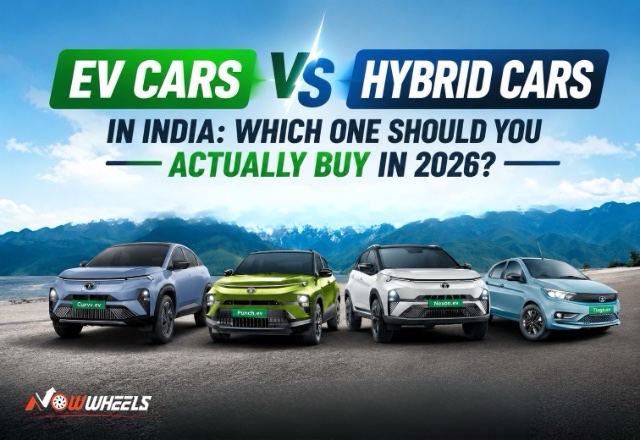
If you’ve been car shopping lately, you’ve probably noticed the showroom conversation has changed. It’s no longer just “petrol or diesel”; now it’s electric cars vs hybrid, and honestly, it’s a much harder call. Fuel prices keep climbing, emission rules keep tightening, and every second ad seems to be pushing either a shiny new electric SUV or a “self-charging” hybrid sedan. So in this EV cars vs hybrid cars debate, which one actually makes sense for your life?
There’s no single right answer here; it genuinely depends on how you drive, where you charge (or don’t), and what you’re trying to save on: money, time, or the planet. Let’s break down the EV vs hybrid cars question, the hybrid vs electric cars question, and the hybrid vs EV cars question, the way a friend who’s done the research would explain it to you.
What Are EV Cars and Hybrid Cars?
EV Cars
Electric vehicles (EVs) run entirely on electricity. They use a battery and an electric motor, so there’s no petrol engine, fuel tank, or tailpipe. This means they produce zero tailpipe emissions and offer a smooth, quiet driving experience. Popular EVs in India include the Tata Nexon EV and Mahindra BE 6.
Hybrid Cars
Hybrid cars combine a petrol engine with an electric motor and a small battery. The car automatically switches between the engine and the motor to improve fuel efficiency. Most hybrids recharge their battery while driving through regenerative braking, so you don’t need to plug them in. Some plug-in hybrids (PHEVs), however, can also be charged externally for a longer electric-only driving range.
The Real Difference: Electric and Hybrid Cars
Here’s the way I’d sum up the EV cars vs hybrid cars comparison. EVs are the cheapest to run, hands down, but they ask a little more of you upfront in terms of planning your charging. Hybrids are less demanding day-to-day since you fuel them exactly like a regular car, but you won’t see the same rock-bottom running costs an EV offers.
Price Comparison: EV Cars vs Hybrid Cars
In India right now, entry-level EVs start somewhere around ₹10–12 lakh, while the more premium electric SUVs can cross ₹25 lakh comfortably. Hybrids tend to sit a notch higher at the entry point, usually starting near ₹16 lakh, and premium hybrid models can go well past ₹40 lakh. Check out our list of the most affordable EVs in India if budget is your top priority.
So on paper, EVs look like the more affordable entry into electrified driving. But if you’re trying to find the best electric vs hybrid cars deal for your budget or weighing EV cars vs hybrid cars purely on price, the real story isn’t the sticker price; it’s what happens after you drive off the lot.
Running Costs: Hybrid vs. Electric Cars
If you’re trying to decide between an EV and a hybrid, running costs are usually where the real decision gets made. Here’s how the two actually compare once you factor in daily use, not just the sticker price.
EV Cars
- Charging at home usually works out to around ₹1–2 per km.
- Those lower running costs add up to real savings the more you drive.
- A smart pick if you’re clocking regular kilometres and want to keep fuel spending down.
Hybrid Cars
- Running costs land around ₹4–6 per km, depending on where fuel prices are sitting.
- Better mileage than a regular petrol car, but still costlier than an EV to run.
- Works well if you want better efficiency without having to plug in anywhere.
Charging and Refuelling
EV Cars
- Chargeable at home, public AC points, or DC fast chargers.
- Home charging is the cheapest and easiest of the three.
- Longer trips need a bit of planning if fast chargers are scarce along the way.
Hybrid Cars
- Refuel at any petrol pump, same as a regular car.
- The battery tops itself up automatically as you drive.
- No plugging in, no changing your routine.
Driving Range
EV Cars
- Typically manage 250–700 km per charge, depending on battery size.
- Great fit for daily commutes and regular city driving.
Hybrid Cars
- Can cover 700–1,000+ km on a full tank.
- The better option for frequent highway runs or long-distance travel.
Maintenance
EV Cars
- No engine oil, clutch, or gearbox to worry about.
- Fewer moving parts mean lower servicing costs overall.
- Batteries are built to last, usually backed by 8+ years of warranty.
Hybrid Cars
- Still need regular engine servicing — oil changes, filters, and the rest.
- Maintenance costs less than a petrol car but more than an EV.
- Battery packs are also built for the long haul, with their own extended warranties.
Driving Feel
EV Cars
- Instant acceleration makes city driving feel smooth and responsive.
- A quiet cabin adds to the overall comfort.
Hybrid Cars
- Feels much like driving a regular petrol car.
- The engine and electric motor work together seamlessly in the background.
- A good fit if you want better efficiency without giving up that familiar driving feel.
Environmental Impact
EV Cars
- Zero tailpipe emissions — the cleaner option on the road.
- More energy-efficient overall, and battery recycling keeps improving.
Hybrid Cars
- Lower emissions than a petrol car, but still burning fuel.
- Doesn’t quite reach EV-level cleanliness.
Government Incentives
EV Cars
- Often qualify for lower road tax, reduced registration charges, and other state-specific perks.
- Buyers may also get tax benefits on EV loans, depending on the applicable rules.
Hybrid Cars
- Generally see fewer government incentives compared to EVs.
Still lookin for more options? It’s worth taking a look at the Maruti e-Vitara to see what Maruti Suzuki’s bringing to the electric SUV space, or the new MG EV car if you want to see how MG is trying to shake things up. And if part of you is still leaning toward a petrol SUV instead, our Hyundai Creta vs Kia Seltos comparison is a good next read before you make up your mind.
Pros and Cons of the EV Cars vs Hybrid Cars Pros
Here are the main pros and cons that will help you make the right choice about which car you can buy
Pros and cons of Electric cars
Pros
- Zero emissions, no exhaust, no fumes, cleaner air for you and the city.
- Low running cost: charging costs a fraction of what fuel does, saving you money every month.
- Low maintenance, no engine oil, clutch, or gearbox mean fewer repairs and fewer trips to the service center.
- Smooth, quiet ride, instant torque and a silent cabin make everyday city driving feel effortless.
- Government perks, lower road tax and registration benefits in many states.
Cons
- Charging takes time; even fast chargers can’t match the speed of a quick petrol fill-up.
- Limited charging points; infrastructure is still catching up in smaller towns and along some highways.
- Higher upfront cost: EVs generally cost more to buy than a comparable petrol car.
- Range anxiety on long trips is much improved but still a factor for frequent long-distance drivers.
Pros and Cons of Hybrid Cars
Pros
- No charging required: refuel at any petrol station, just like a regular car.
- Better mileage than petrol cars: the electric motor takes the load off the engine, cutting fuel consumption.
- Longer range: most hybrids comfortably cover 700 –1,000+ km on a single tank, great for highway trips.
- Familiar ownership experience: Nothing changes about how or where you refuel.
- With lower maintenance than petrol cars: while not as low as EVs, hybrids still save you money over a conventional engine.
Cons
- Higher running cost than EVs: petrol is still several times more expensive per km than electricity.
- More moving parts: the engine and electric motor together mean more components that may eventually need servicing.
- Fewer incentives: hybrids currently get less government support than fully electric vehicles.
- Not fully emission-free: you still burn petrol, so the environmental benefit is real but limited compared to an EV.
FAQs: EVs vs Hybrid Cars
1. Which is better: EV cars or hybrid cars?
The better choice depends on your driving habits. If you mostly drive within the city and have access to home charging, an EV is a great option. For frequent long-distance travel or limited charging access, a hybrid offers more convenience.
2. Is an EV cheaper to maintain than a hybrid car?
Yes. EVs have fewer moving parts and don’t require engine oil changes or many routine maintenance services. Hybrid cars still have a petrol engine, so they need regular servicing alongside their electric components.
3. Do hybrid cars need to be charged like EVs?
No, standard hybrid cars don’t need external charging. They recharge their battery through regenerative braking and the petrol engine, while plug-in hybrids (PHEVs) can also be charged using an external power source.
4. Which offers a longer driving range, EVs or hybrids?
Hybrid cars generally offer a longer driving range. Most hybrids can travel 700–1,000+ km on a full tank, whereas EVs in India typically deliver around 250–700 km on a full charge, depending on the battery capacity.
5. Are EVs more affordable than hybrid cars in India?
EVs usually have a lower starting price than hybrid cars, making them more affordable upfront. However, your overall ownership cost depends on factors like fuel or charging expenses, maintenance, and how much you drive.
Which Should You Buy: Best Electric vs Hybrid Cars
Honestly, it comes down to your own driving pattern more than anything else:
- Choose an EV if you do most of your driving within the city, can charge at home or nearby, and want the lowest possible running and maintenance costs.
- Choose a hybrid if you frequently drive long distances, don’t have reliable access to charging, and want a familiar, no-fuss refueling routine while still saving on fuel compared to a regular petrol car.
There’s no universally “better” option in the EV cars vs hybrid cars debate, just the one that better matches how, where, and how far you actually drive. Whichever direction you lean, both technologies are a genuine step up from a plain petrol or diesel car, and 2026 is shaping up to be a great time to make the switch.